Key Takeaways:
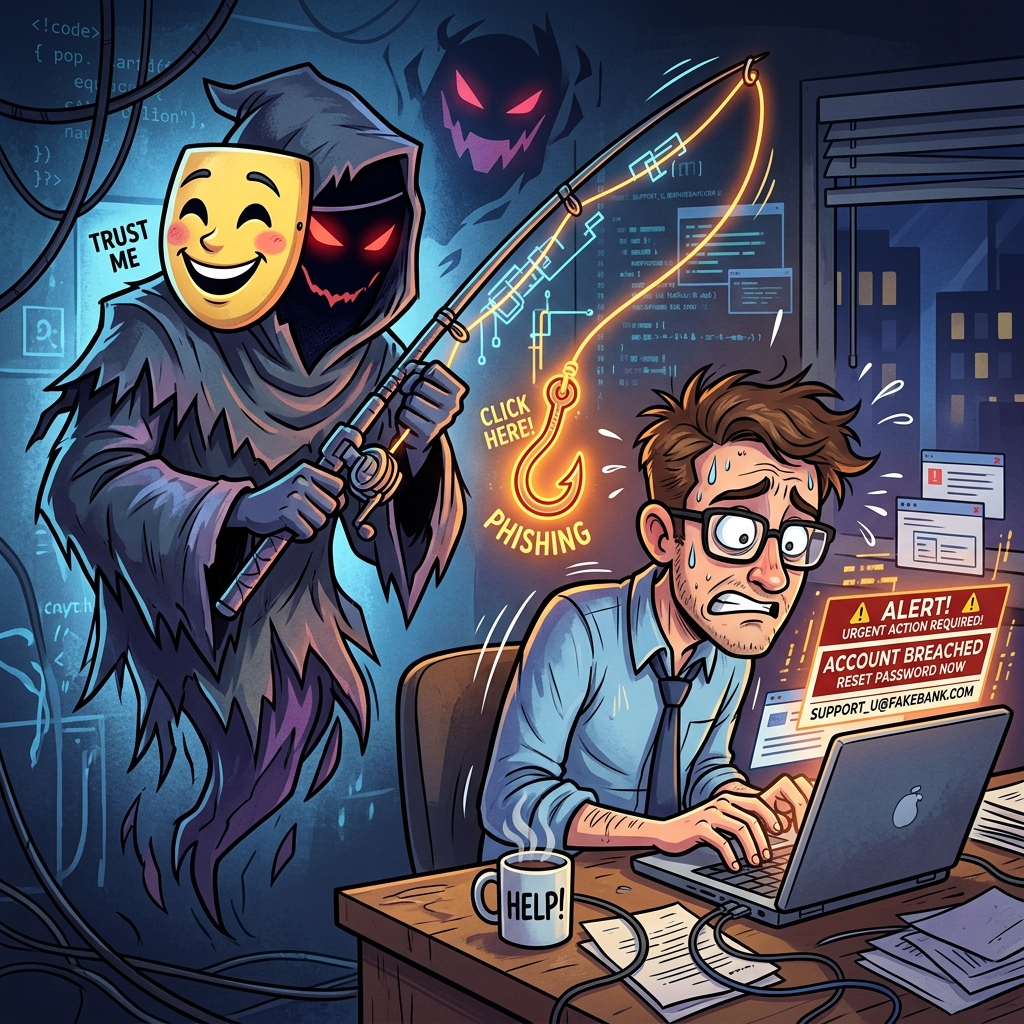
- Social Engineering is the psychological manipulation of people into performing actions or divulging confidential info.
- The rise of AI allows for highly personalized attacks: scammers can clone a loved one’s voice or swap faces on a video call (deepfakes).
- Even if you make a mistake and click a malicious link, GADNET can save the day by blocking the domain at the network level.
There’s a well-known joke in the cybersecurity industry: “There is no patch for human stupidity.” You can spend tens of thousands of dollars on state-of-the-art, military-grade encryption, but it won’t matter if an accounting employee voluntarily hands over the password to a hacker over the phone.
Hacking systems has become difficult and time-consuming. It’s much easier to “hack” a human being by inducing fear, urgency, or a desire to help. This is exactly what social engineering is.
Glossary of Modern Manipulation
Criminals use a few proven methods. They only differ in the medium of delivery, but the goal is always the same: extracting login credentials, taking over a bank account, or stealing a credit card.
| Attack Method | What is it? | Real-life Example |
|---|---|---|
| Phishing | Mass emailing pretending to be legitimate institutions. | An email from “Netflix” claiming your payment method has expired. |
| Spear Phishing | A highly targeted attack aimed at a specific individual. | An email written in your CEO’s tone sent to accounting, requesting an urgent wire transfer. |
| Smishing | Phishing conducted via SMS text messages. | A classic text from a delivery company: “You have a $1.50 underpayment, click the link to pay and avoid package return.” |
| Vishing | Voice phishing over telephone calls. | A “bank security agent” calling you about suspicious activity on your account. |
Generative AI: Changing the Game
What used to be easy to spot (emails with bad grammar from foreign princes) looks perfect today. Hackers use Generative AI to craft attacks that anyone could fall for.
Voice Cloning and Deepfakes (Face Swaps)
Imagine answering the phone and hearing your child’s terrified, crying voice: “Mom, Dad, I’ve been in an accident! I need bail money right now, I’m handing the phone to the police officer!” It sounds exactly like your child. The accent, the tone, the speech patterns—everything matches.
In reality, it’s a voice cloned by AI using just a 10-second audio clip scraped from a public TikTok or Instagram account. In the corporate world, cybercriminals use Face Swap technology, joining video conferences as the company’s Chief Financial Officer and instructing employees to wire millions of dollars.
How GADNET Protects You When You Fail as a Human
Even the best of us have bad days. Fatigue, haste, stress—you get a text about an alleged package, click the link, and are taken to a page that looks exactly like your bank’s payment gateway. You enter your credit card number.
This is where the technology implemented in routers like GADNET steps in. These devices use a mechanism known as DNS Sinkholing.
- Before the phishing page can even load, GADNET queries global Threat Intelligence databases.
- If the link you clicked leads to a domain known for phishing attacks, GADNET simply throws that request into a “black hole”.
- Instead of the fake bank, a warning appears on your smartphone screen about malicious traffic being blocked. Your credit card data remains safe.