
Key Takeaways:
- There are over 820,000 hacking attempts on IoT devices daily.
- 75% of serious small business breaches start from smart home devices.
- Flat traditional networks cannot stop AI-generated botnet attacks.
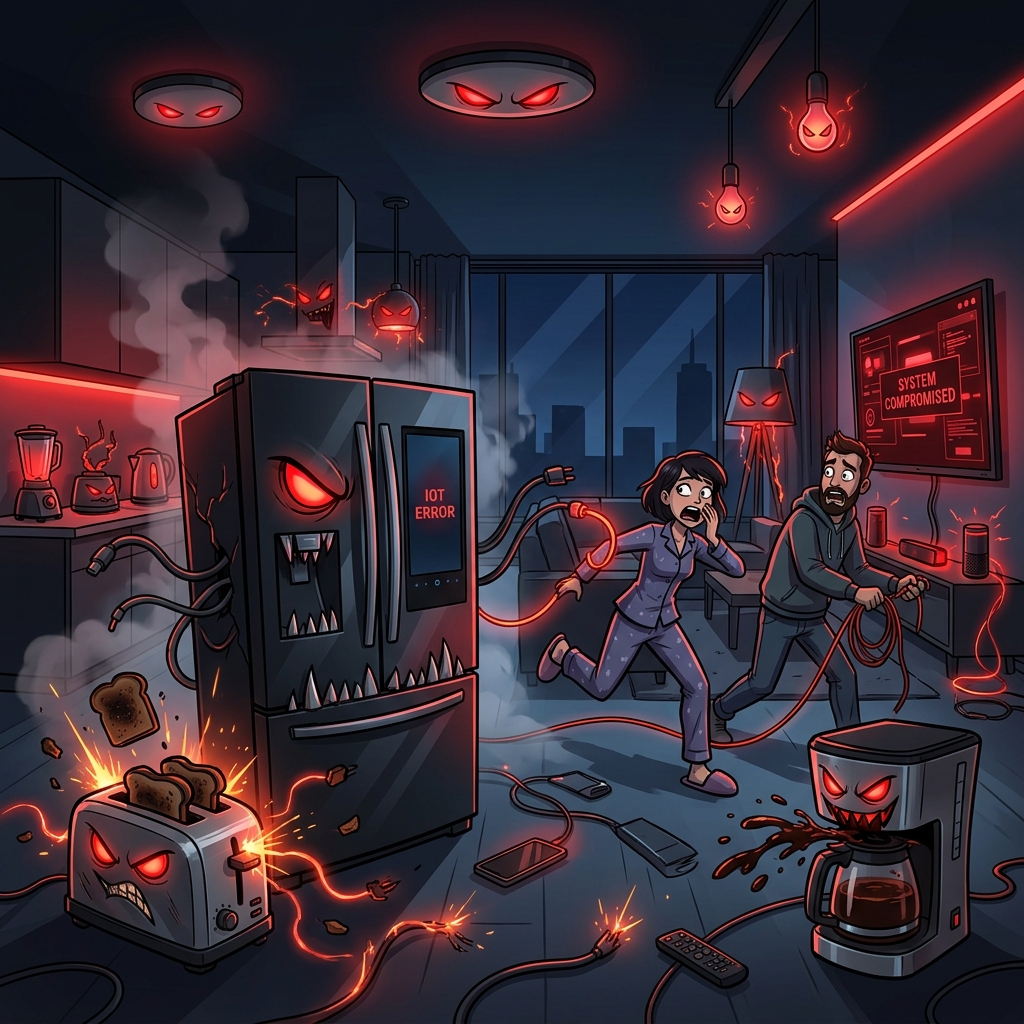
A few months ago, we set up a simple honeypot in the GADNET office lab to see what would happen. We were shocked. Our cheap, off-the-shelf smart bulb was scanned and attacked by malicious bots over 400 times in a single night. We realized firsthand that with artificial intelligence now in the toolkit of attackers, the picture for standard home networks is incredibly grim.
So, what is the weakest link? Basically, it is your generic edge router and all those cheap smart gadgets.
A Terrifying Scale: 820,000 Attacks Daily
If you look at the numbers from early 2026, standard home routers and smart home tech get hit by over 820,000 hacking attempts every single day globally. That is just massive.
Want to hear something even scarier? Over 75% of all home network breaches - the ones involving ransomware and stolen data - start because some poorly secured “smart” device got compromised. For a small business or a home office, recovering from an attack like this now costs around $130,000. Most people just can’t afford that.
The New Face of Botnets and AI-Powered Attacks
Right now, hijacked IP cameras and weak routers are pushing out DDoS attacks at insane volumes. We are talking 20 to 30 Terabits per second (Tbps) during peak times.
But AI is the real game changer here. Hackers are running machine learning tools to automate their scanning and reconnaissance. It used to take weeks for an exploit to go from a newly discovered 0-day vulnerability to a full-scale attack. Now? It takes just a few hours. The AI tweaks the exploit code on the fly to slip past old-school security filters.
Why is the problem intensifying?
Studies show that right now, in 2026, more than half of the IoT devices sitting in people’s homes have critical vulnerabilities. Many cheap camera brands still use hardcoded passwords. They often do not even bother offering firmware updates.
Experts agree on one thing - the days of running a flat home network are done. We built the GADNET project specifically to fix this by rolling out hardware microsegmentation. If you are still relying on that plastic box your ISP gave you, you might want to rethink that. Attackers have automated their entire arsenal, and they can infect a vulnerable home in seconds.
Comparison: Standard Router vs GADNET
| Feature | Standard ISP Router | GADNET Zero Trust |
|---|---|---|
| IoT Network | Flat (Everything sees everything) | Microsegmentation (Isolated) |
| Attack Response | None / Basic Firewall | AI Analysis and Auto-block |
| Updates | Rare or Non-existent | Regular open-source patches |